
Digital Storytelling for Museum: Stories that Give Artifacts Life
Submitted by admin on Tue, 2026-05-19 16:00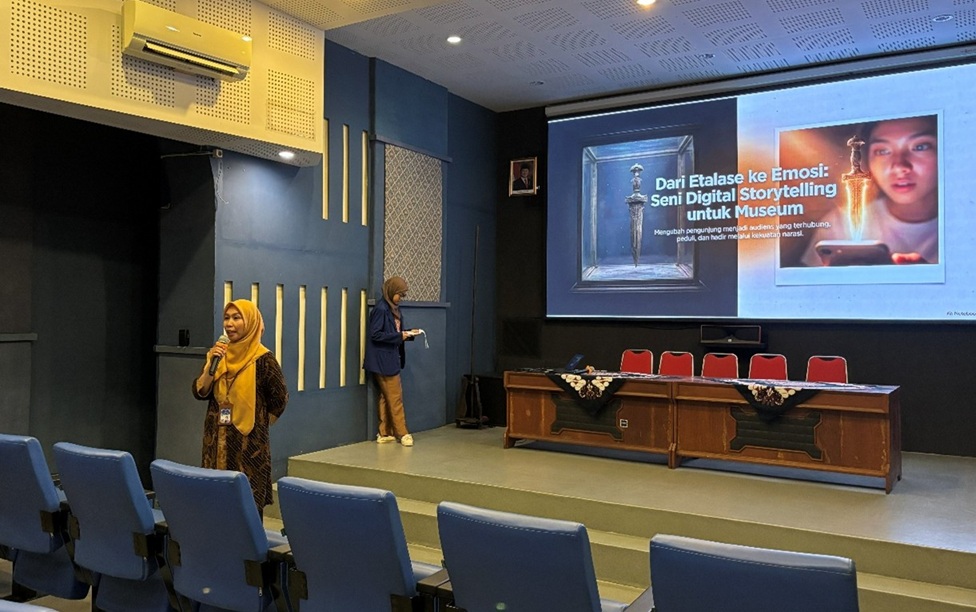
On Tuesday, 19 May 2026, the English Literature Study Program held a Community Service program in collaboration with the Yogyakarta Vredebug Fort Museum (Museum Benteng Vredeburg Yogyakarta/MBVY). The program, chaired by Prof. Erna Andriyanti, S.S., M.A., Ph.D., brought the theme of Improving Skills in Digital Media as a Strategic Step for MBVY Marketing and Branding. Held for two days, this training was attended by 22 MBVY staff from various divisions, such as ticketing, administration, curator, educator, security, and cleaning service.
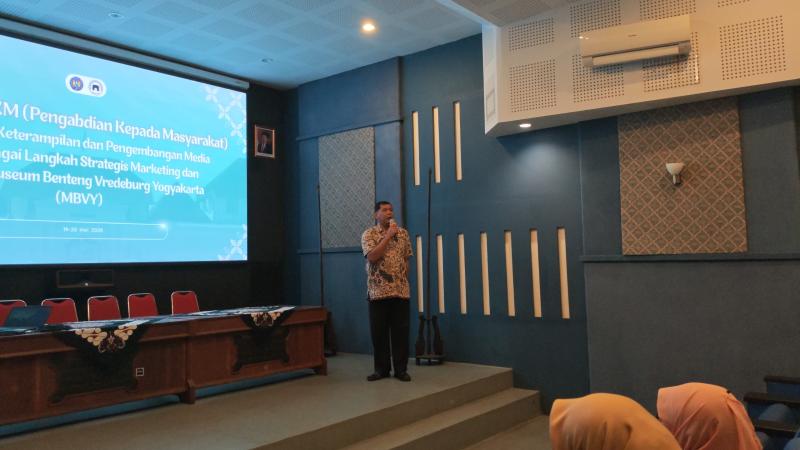
Opening Speech by Vincentius Agus Sulistya, M.A.
The first day of the training program opened with remarks from Vincentius Agus Sulistya, M.A., the person in charge of MBVY. He stated that the MBVY staff who participated in the training were expected to become museum agents who could distribute information, educate, and introduce MBVY to a wider audience, thus making it a prime tourist destination in Yogyakarta.
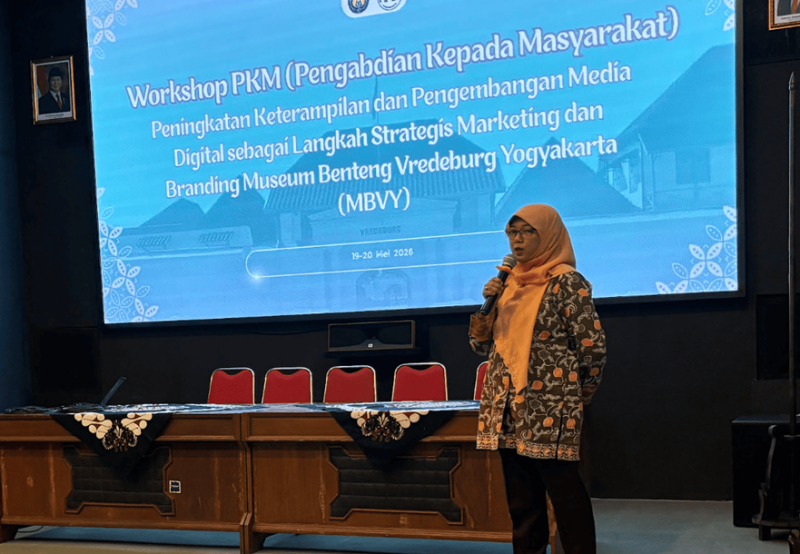
Opening Speech by Dr. Titik Sudartinah, S.S., M.A.
The next remarks were delivered by the representative of the team, Dr. Titik Sudartinah, S.S., M.A. Titik introduced the team members and expressed her high appreciation to MBVY for their active role as partners. In the future, it is hoped that the synergy of collaboration between the UNY English Literature Study Program and MBVY can continue and develop with a broader scope.
Held in the Audio Visual Room, the first day of the training discussed digital storytelling as a museum branding strategy. The speaker for this session was Purwaningtyas Dwi Astuti, S.S., M.A. At the beginning of her presentation, Purwaningtyas explained that storytelling is the art of building connections through narratives to convey messages, information, or experiences that can build emotion, closeness, and meaning for the audience. In the museum context, the essence of storytelling is finding the human perspective behind the artifact.
As a way to promote museums to the public, digital storytelling can create more lasting emotions than simply conveying facts. Furthermore, through digital storytelling, audiences can experience the various narratives sensorially through the use of active verbs and sensory descriptions, which can stimulate the imagination.
To build an emotional narrative that stays in the audience's memory, digital storytellers can refer to The Five Cs Framework: Character (the character being told), Context (story description), Conflict (the main point being told), Climax (the peak of the story), and Closure (the message conveyed to the audience or call-to-action/CTA). In addition, several steps need to be taken to keep the audience following the story, including Hook (the first 0-3 seconds), Discovery (3-15 seconds), Emotion (15-45 seconds) and Reflection (after the 45th second).
In addition to narrative, visual aspects, such as images and videos, also play a crucial role in the success of digital content. Various techniques, such as perspective, framing, and element placement, can be utilized for this purpose. Purwaningtyas showed several examples of posts on MBVY's Instagram account that have achieved high engagement and demonstrate a strong relationship between narrative and visuals.
At the end of her presentation, Purwaningtyas reiterated the importance of digital storytelling as a strategic way to promote museums: hooks to attract audience attention, storytelling to build emotional connections, visual elements to convey emotions, and CTAs to encourage audiences to come and have a firsthand experience at the museum.

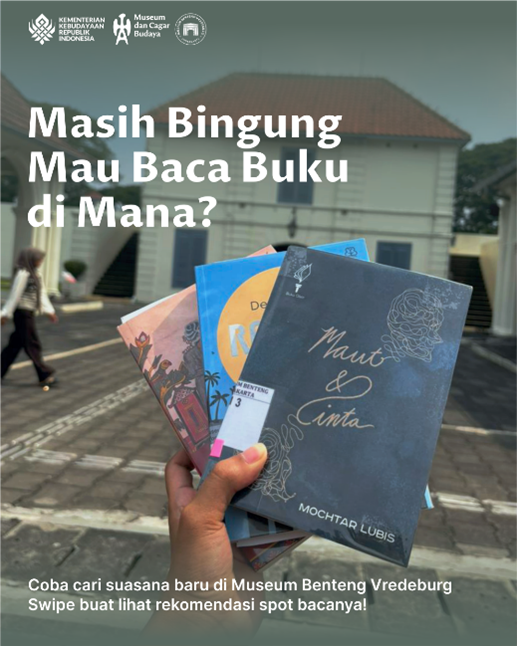
Examples of visuals created by participants
In the final session, the participants practiced various techniques and methods for building digital storytelling, working in groups based on their respective work divisions. After completing their content planning, each group presented their work and discussed it. The first day of training concluded with individual participants reflecting on the material presented, as well as the challenges and obstacles they faced in creating content incorporating digital storytelling. (Ts)